"As you sent me into the world, I have sent them into the world."
John 17:18
We envision a renewed and flourishing community at home and abroad where the love of Jesus is known, experienced and spread to others intentionally, spontaneously and tangibly. We live out this vision
by engaging holistically to address the broken relationships, injustices and hindrances
that prevent all from fully experiencing God's shalom.
by engaging holistically to address the broken relationships, injustices and hindrances
that prevent all from fully experiencing God's shalom.



KENYA Intergenerational Trip Team 2026 Updates
Families Unlimited Network
Donate Most Needed Items in the UPPC Lower Lobby during business hours or contact F.U.N. directly.
Kinders Camp
This summer, UPPC is partnering with World Relief and local churches for Kinders Camp, helping refugee, immigrant and asylum-seeker children prepare for kindergarten through play, English practice and social-emotional learning in a safe, welcoming environment.
UPPC in the WORLD

American South
TBD
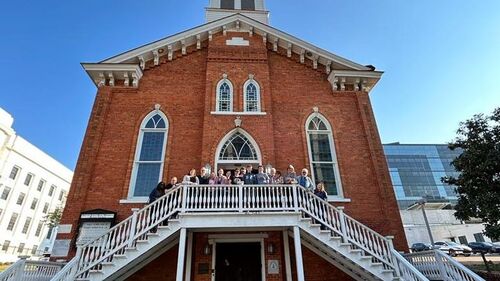
American South Pilgrimage
Be immersed into a deeper understanding of our country's history and be inspired by leaders building God's Beloved Community.
Kenya
August 2026
Intergenerational Kenya Trip
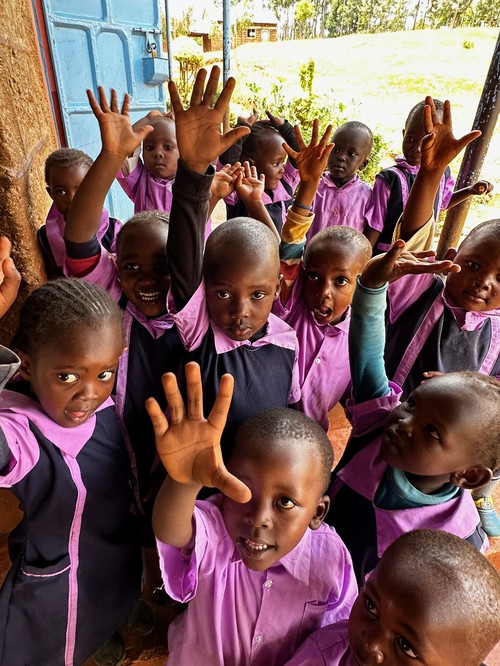
Learn more about this ministry in Meru, Kenya and the upcoming Summer 2026 Intergenerational Trip to visit students and families connected to UPPC's Cherish Ministry.
Mexico
February 13-17, 2025
Intergenerational Mexico Trip
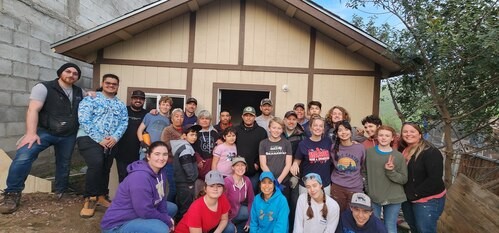
Work alongside El Niño residents and engage in mutually enriching cross-cultural experience.
Ongoing Service Opportunities
Safe Haven Refugee Ministry
Since 2015 UPPC has worked to support refugees in our area. Growing from housing assistance and teams to help a family learn how to live in a new country, our ministry continues to expand. We now provide English classes, supplies for those in detention centers, and weekend housing and transportation to those en route to their final destination. See how you can help at uppc.org/safehaven.
Families Unlimited Network (FUN)
Located on UPPC’s premises, FUN volunteers honor and strengthen families through teaching, supporting essential needs and building relationships out of love for God and neighbor. Donate food, serve in the Food Bank, or volunteer in the Spot After-School Tutoring Program. More information at familiesunlimitednetwork.org.
Cherish Meru, Kenya
Since 2003, UPPC has been partnering with Hope International Ministry Trust to educate, equip, and empower children in Meru, Kenya through child sponsorships, caregiver visits, and auxiliary support. Learn how you can sponsor a child or provide other financial support at uppc.org/cherish.
Coffee Oasis Pierce County
Provide love and support to homeless youth by becoming a youth center volunteer, mentor, or street outreach volunteer at the Coffee Oasis Tacoma Shelter. Volunteer Training is offered the first Saturday of each month.More information at thecoffeeoasis.com/volunteer.
Habitat for Humanity
The Tacoma/Pierce County branch of Habitat for Humanity selects families to receive newly-built or renovated homes. They offer a “hand up” rather than a “handout”. Since 1985 HH has built or rehabilitated over 300 homes in Pierce County. UPPC partners with HH by helping build two homes in the area each year. See how you can
put your faith into action at
www.tpc-habitat.org.
put your faith into action at
www.tpc-habitat.org.
UP & North Tacoma Young Life
UPPC and Young Life have been partnering for decades with the goal of helping adolescents become followers of Jesus and helping them grow in their faith. You can get involved in a variety of ways, including becoming a Young Life leader, joining a prayer team or providing meals. To find out more at upnt.younglife.org.

My story serving at UPPC
Dan Small, Families Unlimited Foodbank volunteer
For 6 years, I have volunteered at the Families Unlimited Foodbank. Giving my time to help others is very important to me. I pick up food from local grocery stores and food warehouses that helps feed nearly 2,000 people each month. The hours I give each week helping others is rewarding and helps strengthen my faith in Jesus with every box of food I unload.
Jennifer Boucher

As the days count down closer to our departure, the trip to Kenya has shifted from an idea of something that God had called me into and become something that is actually and imminently happening. That shift comes with some anxieties and worry over the unknown, but also an excitement and an appreciation for how God is already moving in the midst of our group. Teenagers are taking on tasks and stepping into leadership roles. Relationships and connections have been forming in our team as we have met together to prepare. I participated in Day Camp last week and saw the kids learning about life in Kenya and the programs UPPC has been involved with for decades. I was filled with an appreciation of the cross-cultural connection that was happening and I'm excited to now travel to Kenya, to learn from them and to share with children there about the kids (and adults!) here who are thinking of and praying for them. We filmed our kids singing the theme song and will teach it to Kenyan kids on our trip. These children that live continents apart will have a small connection and shared experience. I pray that they will feel God's love through our actions as UPPC ambassadors and bridge builders.
Ava Kunz

I am excited to go to Kenya, because I will be able to see kids from different schools, and how they live. I will also help kids with their daily activities and chores. We will see how feeding programs supported by the church benefit the kids. We are traveling by bus to two different cities. I’m so excited to learn about their Kenyan culture, and eat at local people’s homes. At the end of this EPIC adventure, we get to go on a safari!
This is why I’m excited for Kenya!
Julianne Bishop

As we prepare to leave for Kenya in a few days, I'm feeling an abundance of excitement and a little nervousness as we prepare for this trip. More than anything, I'm looking forward to spending time with our Kenyan friends and developing relationships with them. While I have a few nerves about navigating my food allergies and staying healthy, I feel well prepared and trust that God will provide what I need. Above all, I am praying that God would prepare my heart for this journey and help me approach each day with openness, trusting Him to teach me what He wants me to learn.
As I think about what I'm hoping for, I'm trying not to hold onto specific expectations. Instead, I'm praying that God would give me an openness to see where He is already at work and a willingness to be changed by what He wants to teach me. I hope to leave with a greater appreciation for the ways God is already at work in Kenya and a heart that has been shaped by what He has invited me to experience.
Gideon Bosh

“Mwiti’s your middle name?”
Every time a friend learns of my middle name they laugh- “What kind of name is that?” my friends tell me. But to me, Mwiti is a very honorable name. You see, when I was still in my mom’s stomach my mom went to a country in East Africa for a ministry trip. This nation is Kenya, and she was visiting the Meru District. The Meru people called my mom Mama Mwiti, which in their local language means Mama of a Traveler, referencing the little baby that she was pregnant with. So naturally, a few months later when I was born back in the States, they made my middle name Mwiti, exactly what the Meru people had named me, giving me a piece of Kenya. When I was 7 years old, I was first able to visit the place where my name comes from and see many of the people that named me. At 7, I failed in large part, though, to grasp why and how my mom came to serve the people of Meru. I played soccer right along with kids my age from the area, but couldn’t conceptualize the deep inequalities in the world, or my privilege compared to the rest of the world.
August 3
If I had to describe this trip in one phrase, it would be “Money can’t buy happiness.” Why? Because I have seen many people full of joy on this trip who have next to nothing. For example, the Maasai people in Laikipia county, who are nomadic herders and live in tiny clay huts, living in meager conditions at best, yet greeted us with exuberant joy and excitement, and were very eager to meet us. They showed me that although they had very little, it didn’t matter because they were extremely happy. A simple porridge mixture for the kids’ school lunch program got the village giddier than a kid on Christmas!
Another example of this is talking to the students at Nyweri Primary School. The kids’ soccer balls were very worn, so we donated a few to the school. It didn’t cost much for us to supply these kids with these balls, but their joy was priceless. It was as if we had given them a million dollars, showing how you can’t pay someone to be happy, but instead shows us that we should be grateful for all the small blessings in your life, a lesson I have learned from the people of Kenya.
If I had to describe this trip in one phrase, it would be “Money can’t buy happiness.” Why? Because I have seen many people full of joy on this trip who have next to nothing. For example, the Maasai people in Laikipia county, who are nomadic herders and live in tiny clay huts, living in meager conditions at best, yet greeted us with exuberant joy and excitement, and were very eager to meet us. They showed me that although they had very little, it didn’t matter because they were extremely happy. A simple porridge mixture for the kids’ school lunch program got the village giddier than a kid on Christmas!
Another example of this is talking to the students at Nyweri Primary School. The kids’ soccer balls were very worn, so we donated a few to the school. It didn’t cost much for us to supply these kids with these balls, but their joy was priceless. It was as if we had given them a million dollars, showing how you can’t pay someone to be happy, but instead shows us that we should be grateful for all the small blessings in your life, a lesson I have learned from the people of Kenya.
August 4
As I travel through Kenya and introduce myself as Mwiti the connections with the locals have become very real. One of our drivers for example, shares the Kimeru name of Mwiti with me, something he found extraordinary and I was able to share the beautiful story of my middle name. Additionally, a teacher at one of the schools wouldn’t leave my side and wanted to know all about me after hearing my name is Mwiti, for apparently that his brother’s name too. Many people have also been confused when I introduce myself as Mwiti. A young man I talked to at a dinner named Douglas was entirely confused to learn of a mzungu (the Swhalli name for “westerner”) who identified with a name of the Meru people. It sparked a conversation and helped break stereotypes of what a mzungu is like, for he assumed that a white person like me would be stuck up and not wanting to have conversation, while instead I answered his thousands of questions he had about America, got his number and made sure he knew I’d love to host him in the USA if he gets the chance. In essence, my name has created a deep connection between me and the people here in Kenya, something very lifegiving as people are able to relate and are able to connect past the giant mzungu label that can be very unsettling.
DAY 1 | Nairobi
Today was our day to get adjusted and wait for the arrival of the last two members of our team. We were up early for devotion, worship, and orientation. Then we were off to the David Sheldrick Elephant Orphanage. This sanctuary supports orphaned elephants until they can be reintroduced to the wild. We had an incredible up close view of a zebra and a rhino and a small herd of baby elephants. The zebra and rhino were rescued around the same time and have become good buddies despite being different species. Just as God calls us to love our neighbor despite our differences, these two showed us how being open to those different from us can create beautiful friendships. Elephants are very smart and social animals. They stick together. When one is in danger, the entire herd circles around to protect the vulnerable amidst them. Even these young ones rescued from different areas showed us how important community and supporting one other is in God's Kingdom. We then headed to the Giraffe Centre where we learned about and got to feed the endangered Rothschild Giraffes. There were also wild wart hogs who enter the property. The two have a cooperative relationship in the wild. The warthogs help clean up the area and giraffes warn the warthogs of incoming predators. They both attract the same bird that removes parasite ticks from each other. Just as God intended, working together as one body of Christ. We finished the day with dinner at Isaiah and Rose's house with their family, including a brand new grandchild. While the adults caught up, Ava had a blast with the older grandchildren who taught her to ride a bike. Milestone moment learned in Kenya! And our entire team officially arrived by bedtime.
DAY 2 | Laikipia and Mr Koome
We left bright and early to head to Laikipia to learn more and meet recipients of our Wototo Ministry and the fortified porridge. Our students at VBS raised money along with us for this program. We meet up with Mr Koome at the Tree House restaurant where we got to visit with some monkeys, including 2 moms with babies. Then we headed out on some extremely bumpy roads. Our drivers told us it's the free Kenyan massage. On our way to the school, a group of children stopped us on the road. They wanted to show us their homes before heading to the school. We were greeted with singing and dancing and the biggest smiles. They grabbed our hands and had us join the dance. We had a quick peek at their homes. The homes were very small huts made of mud, cow dung, and sticks. There were surprisingly cool in the Kenyan afternoon sun. The girls were so proud of their humble abodes and so grateful for UPPC sponsoring the fortified porridge. We bumped along the road to the school where all the kids were eagerly waiting our arrival on their last day of school before a one month break. They had entertainment planned for us. Two different grades performed a song and dance for us. They had Jenny, Teya, and Allison join the first group. The second group pulled in Jenny again ( they must have been able to tell that she's a dancer and drama teacher), Ava, Gideon, Pastor Tina, Julianne, and Mr Koome. The kids all said thank you to us, we presented them with soccer balls, and pastor Tina prayed a blessing over all the children. We toured a classroom with some kids. They we so excited to show us the words on the wall they were learning. We reluctantly were pulled away from playing with the kids, but were rewarded outside the school kitchen by an explanation of the porridge feeding program and sustainable gardens. The heads of many local schools expressed their appreciation for UPPC's commitment to the program and stories from their individual schools. Each learner (as they call their students), gets a cup of a high protein, high fat, high calorie, vitamin and mineral enhanced porridge every day they attend school. For many of the learners, this it's the only meal they get. Total student enrollment for the schools have all increased. They've also seen the attendance of those enrolled improve as learners don't want to miss a day of school and their porridge. Siblings even bring younger than preschool aged siblings with them to school to recieve a meal. Full communities are transformed. With better nutrition, the kids learn better and have more energy. One school had a public nurse visit. After the program started, the number of sick visits to the medical clinic decreased dramatically. Mr Koome wanted to make the program more sustainable. They started gardens. They teach the children about planting corn, beans, and potatoes. Since the families have historically been nomadic, many hadn't ever seen crops fully grow. Not only are the children learning the skill, many are taking back their new knowledge and sharing it with older siblings and parents. The crops increase the food supply for the learners. One school has already built a burrhole and have pumps run by solar power to irrigate their crops as well as the nearby school. Others are looking for funding for similar water sources. We attempted to visit a second school, but because we'd spent too long at the first school, we ran out of time. We ended with dinner at Mr Koome's house along with some of the heads of all the schools in the area and some local government officials. We all had some interesting conversations about the schools there, cultural differences and school structure in the US. Many bonds were created with our team and those helping learners get nutrition.
DAY 3 | Meru Town
Today we moved from Laikipia to Meru town. The drive around Mt Kenya was beautiful. We even saw a different kind of monkey from the ones we saw yesterday, and a whole troop of Baboons. We crossed the equator (again, we did that yesterday in Laikipia)
We went to a primary school in Meru where UPPC sponsors a feeding program. Instead of fortified porridge, this school makes a meal: usually rice, a stew and some fruit. UPPC donates 80% and the parents pay 20%. Similar to the Laikipia program, the learners are healthier with better attendance, enrollment has increase, and the kids have more energy and learn better. But the ripple effect has changed the entire community. Since their children are fed, parents can work longer hours to provide for their family. The education level of the community is increased thru generational improved learning and education. Even the teachers have been inspired to be more generous to students in need because of the example of giving by UPPC and the effect that kindness has had on the community. Teachers will chip in to cover the parent's portion of meals or help with supplies for the families who can't afford it. The head mistress said witnessing the generosity of UPPC and the impact on their students have changed the lives and perspective of her and her teachers. Cooperation and working together were words used over and over as each person spoke. The stories of how the entire community has succeeded after starting the program of a simple free lunch were incredible. The little things can have a big impact. We had lunch with the teachers with the same meal the kids had. Josephine's father and brother joined us. After, we presented each child with a bracelet. They were over the moon with excitement, wanting to show off their bracelet. The teachers then brought out the soccer balls we donated. It was pandemonium of sheer joy and excitement! It was hard for us to leave the kids. We did one quick home visit to check on Dorothy. She has cerebal palsy and is essentially home bound. When we arrived, she greeted us at the door with the biggest, most beautiful smile. She loves to knit. Josephine gave her caregiver money to buy yarn in town. Josephine will return to collect what she made and sell it to help Dorothy earn an income. We headed back to meet with the Hope Team to plan our seminars tomorrow. Little known fact: our very own Josephine Mburugu went to school at that exact school we visited.
DAY 4 | Hope Students
We woke to some very Washington weather... cool and misty. Today we meet with the Hope team and all the UPPC sponsored students. I was surprised at the number we sponsor. They were about 145 students from various schools in the area. We had a great day meeting with all the Hope kids. There were introductions, a message from Pastor Elijah, and 2 alumni of the program spoke. They each told their powerful stories of how sponsorship and God changed their lives and how both are now successful teachers giving back to learners like themselves. We then broke the kids up into younger and older learners. The young ones went with our teens and some of the adults to play games about communication, cooperation, and problem solving, to do crafts, and learn a song and dance ("Alleleluia" the same song UPCC VBS learned). Anji, Candice, Pastor Tina, and Jenny took the teens to talk about pregnancy, hiv/aids, stds, self respect, sexual boundaries, consent, body autonomy, and healthy relationships. There were more teens than we expected (about 75). After talking about consent, relationship boundaries, and respecting our own bodies, they submitted questions for us to answer. They asked some really deep, personal, intimate, difficult questions. It was an honor to be trusted as unknown American visitors with such sensitive questions. They were all really engaged. After our groups, those of us on the team who sponsor a child got to meet them in person. It was an incredibly special experience. We all had lunch together and visited. Then the kids wrote letters to their sponsor and we passed out letters we brought from the sponsors in Washington. Each student got a bracelet. There were also cards made by the Vacation Bible School kids who also raised money for the Wototo project (feeding programs). There was tea, more visiting, playing and farewells. It was a fun and busy day, but we were all exhausted.
DAY 5 | Church
Today we had the blessing of attending Peter's church in Karugwa. It's the church Peter and Josephine were married in: Karugwa Methodist Church. We arrived as Sunday school for the kids was finishing. Our teens were invited to visit the Sunday school. They all had tea after. For service, we were honored to sit in the front rows. The service was a beautiful blend of Kenyans and UPPC members, leading in English and Swahili. Gideon read scripture : Luke 11. Teya, Adahlia and Allison led a song. The youth, the men's choir and women's choir each sang. The youth choir invited our teens to join. They did amazing singing along in Swahili. Peter participated in the men's choir. It was fun to see him light up in his element. When it was time for the children's choir, our kids taught and lead them in Alleluia (the same they taught the Hope kids). It was a big hit! Emily prayed along with their pastor for the world, the community, families, those in need, the sick and the hurting. Pastor Tina preached and Josephine translated. The offering was amazing. Some brought money. Other brought goods, like bananas, eggs, corn, avocados, arrowroot, and even 3 live chickens. After the offerings were blessed, they auctioned off the goods. The money raised went into the offering fund. You could bid for yourself, or bid and gift your winning to someone else. A lot of our team was gifted winnings. The best was Adahlia getting a live chicken. Since she won't have room in her carry on, she in turn gifted it to the local pastor. We gave him a ride home in our vans. He hopped in with his briefcase and 2 live chickens. After service, the church served us tea and lunch. The kids hung out outside with the local kids while the grown ups talked with the pastor and other church leaders. It was an incredible, spirit filled experience. The entire service lasted about 4 hours, but was interactive and engaging. Despite being from different continents, speaking different languages, we were one body of Christ. We honored the same a Lord our God, hand in hand, heart in heart.
DAY 6 | Hope Ministries
This morning, our leaders (Josephine, Peter, Pastor Tina, Julianne and Emily) all meet with the leaders of Hope ministries for a business meeting to discuss budget, needs, legal requirements, future plans, etc. The rest of us were glad to have a morning to sleep in. Later in the morning those of us not in the meeting went on a sight seeing tour of Meru by one of our drivers who is from Merutown. We all meet for lunch after the meeting was over. Then a group of us went to do a couple home visits. We visited Candice's sponsored student Whitney and her mom. They were so exited to show us their home. They live in a little compound with grandma, grandpa, two aunties and their families. They all came out to meet us. The family had graciously set out fruit for us. She has saved every card, letter, postcard and picture I've ever sent her. I was able to gift her some things too big to mail that were all Pacific Northwest themed along with some school supplies. It was such a powerful, meaningful meeting neither of us will forget. Pastor Tina prayed for her family and then Whitney gave us all the most beautiful blessing. Then we stopped by Samuel who the Boucher family sponsors. He is such a kind, brilliant, humble young man. Jennifer and Allison were glowing with love and excitement talking with him and giving him a gift. His mom and little sisters were there as well. Everyone was so appreciative. Some neighbor kids were also so excited to see us, they started changing "mzungu" with such joy and excitement. Ask a trip member what that means or look it up. After, we all headed up to Josephine's dad's place for dinner. They showed us around the farm where Josephine grew up, complete with cows, avocado trees, macadamia nut trees and coffee plants. They graciously served us a wonderful dinner as we visited with her family. Everyone here is so gracious, welcoming, and hospitable.
DAY 7 | Home Visits & Tea
Our last full day in Meru. We stopped first at the Imeti Tea Factory: the premiere processor in Meru. They weren't processing that day so we got a behind the scenes tour of how tea leaves are dried, activated and cut and packaged. No pictures were allowed to protect their process. After, we headed to Esther's mom's house for lunch. Along the way, we stopped to visit 2 sponsored students and their parents at the farm they work. As always, nearby relatives and friends popped in to see the excitement. Both siblings and their parents were filled with gratitude. They even sent us with a bag of vegetables from their garden. When we arrived for lunch, her mom Mary, who is 101 years old, and one of her brothers, Timothy, met us. He showed is through his farm including a baby cow, mom and sibling cow, goats, sheep, and rabbits. Ava had intense conversations with them all mooing and baaing. We had a wonderful lunch after tea and I iappetizers of fresh avocados off the tree and fruit. After lunch we went out to their tea fields and they taught us to pick tea. Her brother said we we all to slow. Julianne got a video of got l how incredibly Timothy picked. After we did some processing together and had more tea. Then it was time to split up the vans for more home visits on different areas. Each area terrain was a little different, but their gratitude, hospitality, faith, and joy were consistent in every home. My van also got to stop at Elijah's house for tea and fruit. Him and his wife Pricilla have be married for 50 years! We did another home visit to a couple of sponsored siblings who are orphaned and being raised my their grandmother. There were a lot of neighbor hood kids there. We gave out the last of the toys and gifts we brought. I had a little bottle of tic tacs I gave to a girl in a little group who hadn't gotten anything before we ran out. I told her to share and was amazed at the group of young children who excitedly but patiently gathered around and shared the tic tacs evenly. One little tic tac made the day of each of these kids. Such a reminder for us about gratitude for the little things. We all met back up together at Amalia's house for dinner. We got to meet some of her family and some of Josephine's friends came. They were laughing together like teenagers which was so fun to watch. Amalia had a big surprise for Candice and invited her student Whitney who lives near by for dinner. The two talked all night and barely stopped to eat. It was such a special gift to have that extra 2 hours of bonding. My heart is full.
DAY 8 | Goodbye Meru
This am we had to say goodbye to our Meru friends. But first, Angi got to go to the pediatric hospital with Peter, his sister, and Josephine. Usually the hospital is overflowing, but because the nurses were on strike, there were not nearly as many as usual. The rest of the team did devotions and worship. There were quite a few upset tummies that morning so lots of prayers for healing that were answered. We we're grateful most of our work was done and issues were mild and quickly resolved. We packed up for Simba lodge near the Samburu National Reserve. The environment drastically changed to dry, desert climate with mostly nomadic live stock tenders. We drove through Isiolo, which is a primarily Islamic city, though many Christians also live there without any religious tension. Isiolo used to be the center of Kenya and the town the colonizing British in Kenya and Italians in Sudan fought over. Along the way there were wildlife crossing signs with elephants and giraffes the way we have deer crossing signs. As we entered the reserve, even before we got to the hotel or inside the park, we were greeted with a variety of African animals. We saw zebras, oryx, impalas, gazelle, ostrich, and a wide variety of birds, and even a giraffe in the distance. Monkeys greeted us right at our rooms. there we a ton of pretty birds around. We got checked into the hotel, had lunch, and settled before heading out on our first game drive. We'll include that in tomorrow's update with the two other game drives we did.
DAY 9 | Safari
We arrived to Simba lodge in time for lunch. There was a crocodile at the waterhole below the pool and monkeys everywhere. After lunch we headed into the national park for our game drive. We spent about two hours driving around the reserve looking for animals. Right away we came upon a pack of elephants, including a baby. Our driver said he'd never been so close to this many elephants. It was incredible to see and the most loved sighting of many of us. We saw two types of giraffes, 2 types of zebras, a variety of antelope, impalas, oryx, ostrich, dikdik, waterbucks, monkeys, and tons of different pretty birds. We returned to the hotel for dinner. The next am we left for another game drive at 7. Some of us were lucky enough to see two kudu right next to the path. Our driver told us they are rare to see and a sign of good luck. And they were. The first spotting was a juvenile leopard in a tree. Leopards are hard to find and rare to see. We saw all the same animals from the day before except for elephants. We also passed a natural spring created from bombing between colonial British and Italians fighting for the area. It is the only safe swimming area. The kids were so sad they didn't bring swimsuits and convinced our drivers to promise to return on our afternoon drive. We learned lots of Kenyan history and about the animals and terrain from our guides (who happened to be the three drivers for whole trip and the same vehicles, but we learned the roofs pop up to stand and see the animals). We were back to the hotel for some rest and relaxation at the pool or for naps. There was very little rest any other part of the trip. We had our final game drive that evening and our drivers were true to their word. We all (except Josephine and Peter who went looking for more animals) went swimming in the spring. It was so fun and refreshing. We hopped back in on the hunt for lions and more elephants. We never found them, but found a second leopard. This one was fully grown. She graced us with a show of climbing down the tree. We also saw a crocodile who was sunbathing and then climbed into a watering hole. There were lots of the same animals we'd already seen. Zebras and giraffes were the biggest hits. The lions eluded us, but we saw a ton. Ask a team member which animal was their favorite and some facts we learned about it.
DAY 10 | Travel to Nairobi
We left Simba lodge for the long drive back to Nairobi. The monkeys and birds were active at breakfast and as we packed. On the drive out to the highway, a large tower of giraffes wished us farewell. We left at 730 and didn't get to the hotel in Nairobi until about 4. We only stopped twice. Once was at the equator to watch how truly water spins on opposite directions north and south of it. We also stopped to use the restrooms and shop at the curio shop. That was a stressful situation for many of us Americans. Nothing has a price. You bargain. Generally the bargain process is pretty straight forward, but these guys were intense. They were not backing down on prices much. It was the hardest bargaining we experienced. We arrived at the hotel. The kids swam a bit while the adults reorganized bags for departure in the am. We had dinner and devotions. Candice leaves bright and early. The rest are going to reattempt market shopping and have dinner at Carnivore before they catch redeye flights. The blog torch is being passed to Gideon amd Marty for the last day adventures. This has been an incredible, life changing trip. It's been a gift to meet all these joyous children, grateful for the smallest things (like porridge). We met a lot of incredible adults doing the work here. As Amalia said, we work together. UPPC are the hands and they are the feet of Jesus making a difference in the lives of children and the whole community in Meru and Laikipia Kenya. God is Good. All the time. Praise God. Kwaheri Kenya.
Kenyan Names
Emily had studied in Kenya in college. The Kenyans gave her and her husband Kenyan names. Kanana and Mwenda .... one who is deeply cherished and one who loves.... because he loved her so much. When they had kids, they gave their first two kids those middle names. She came back to Kenya when she was pregnant with her 3rd. The Kenyans called her Mamá Mwiti because she had a traveler in her belly. Hence his middle name became Mwiti. Mwiti and Kanana are on this trip with us and go by their Kenyan names here. All the Kenyans love it when they hear this. They especially love calling on Mwiti as we've worked with adult Mwitis. One of the other teens asked if she could get a Kenyan name. Josephine said she had to think about it. She tasked the Hope sponsored students with naming all the kids. The Kenyans students submitted names and we had a naming ceremony at the end of Hope day. They were bestowed the names Mwendwa (female version of Mwende) meaning one who loves, Makena meaning full of joy, and Kendi meaning beloved. Julianne was in the van with all the kids when they excitedly told their driver their names. He asked Julianne hers. She said only the kids got one. He named her Muthoni meaning humble one. So if you see Gideon Mwiti, Adahlia Kanana, Teya Makena, Allison Mwendwa, Ava Kendi or Julianne Mathoni, tell them "jambo" ( hello in Swahili).